Discussion
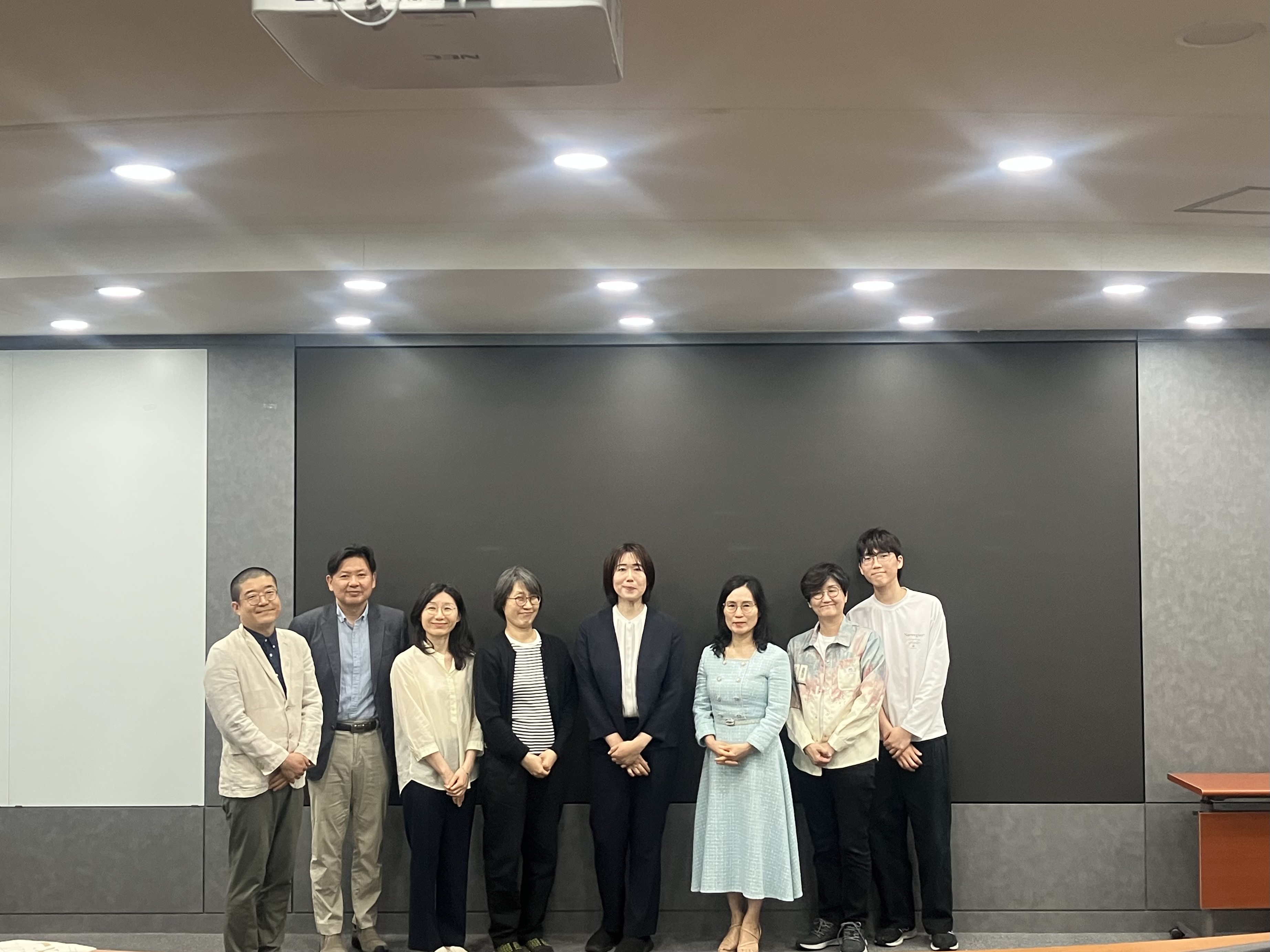
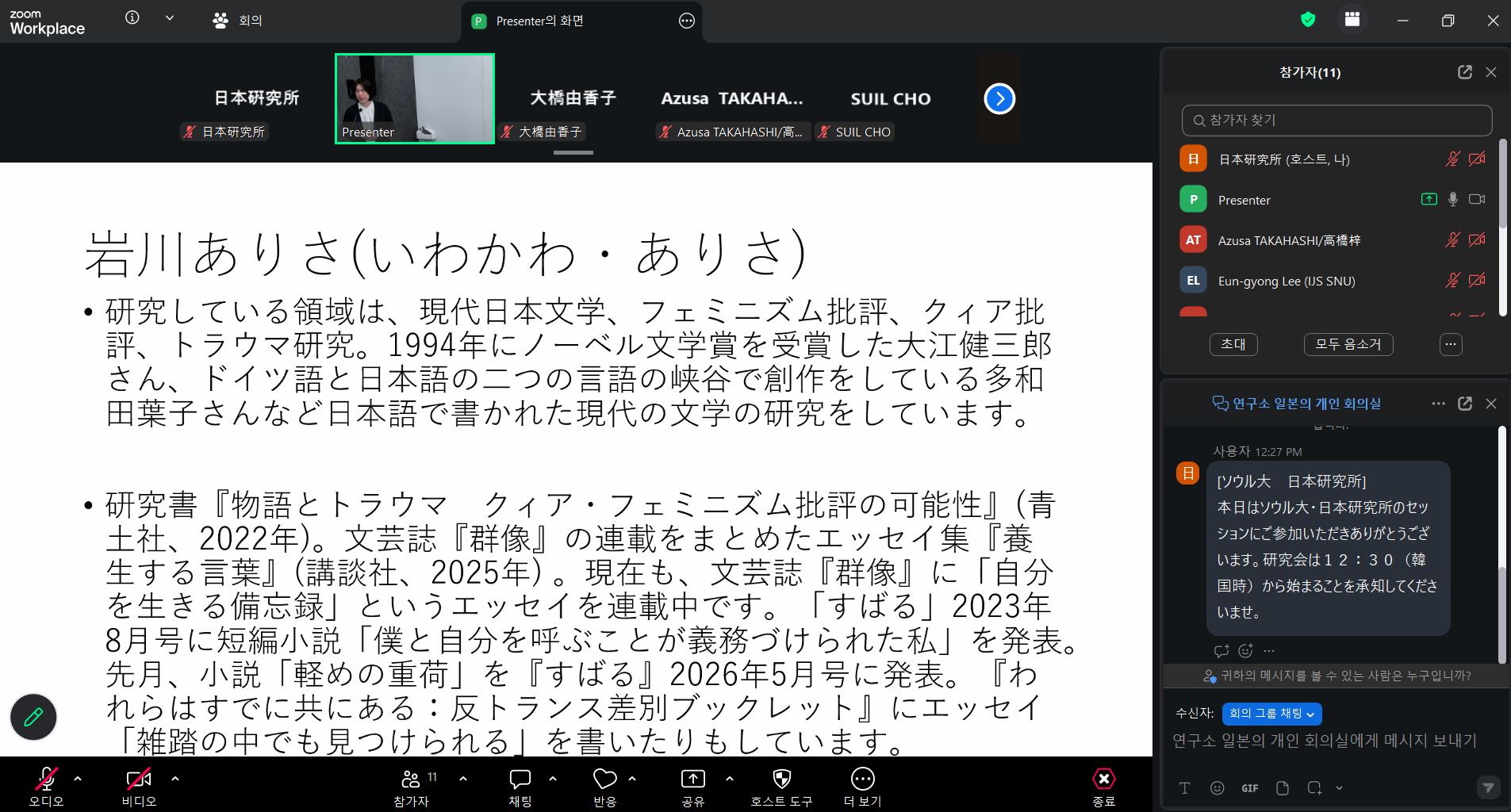
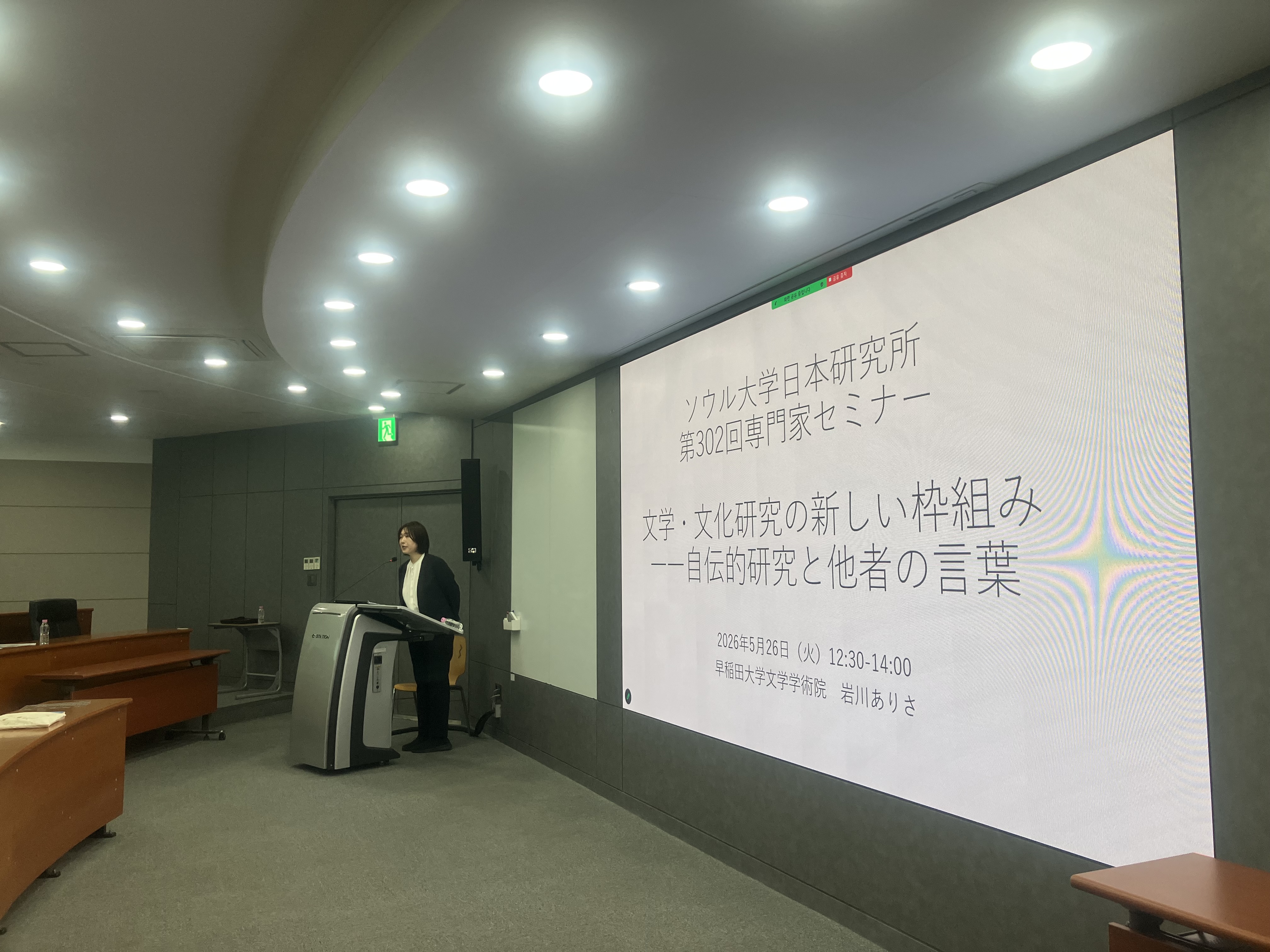
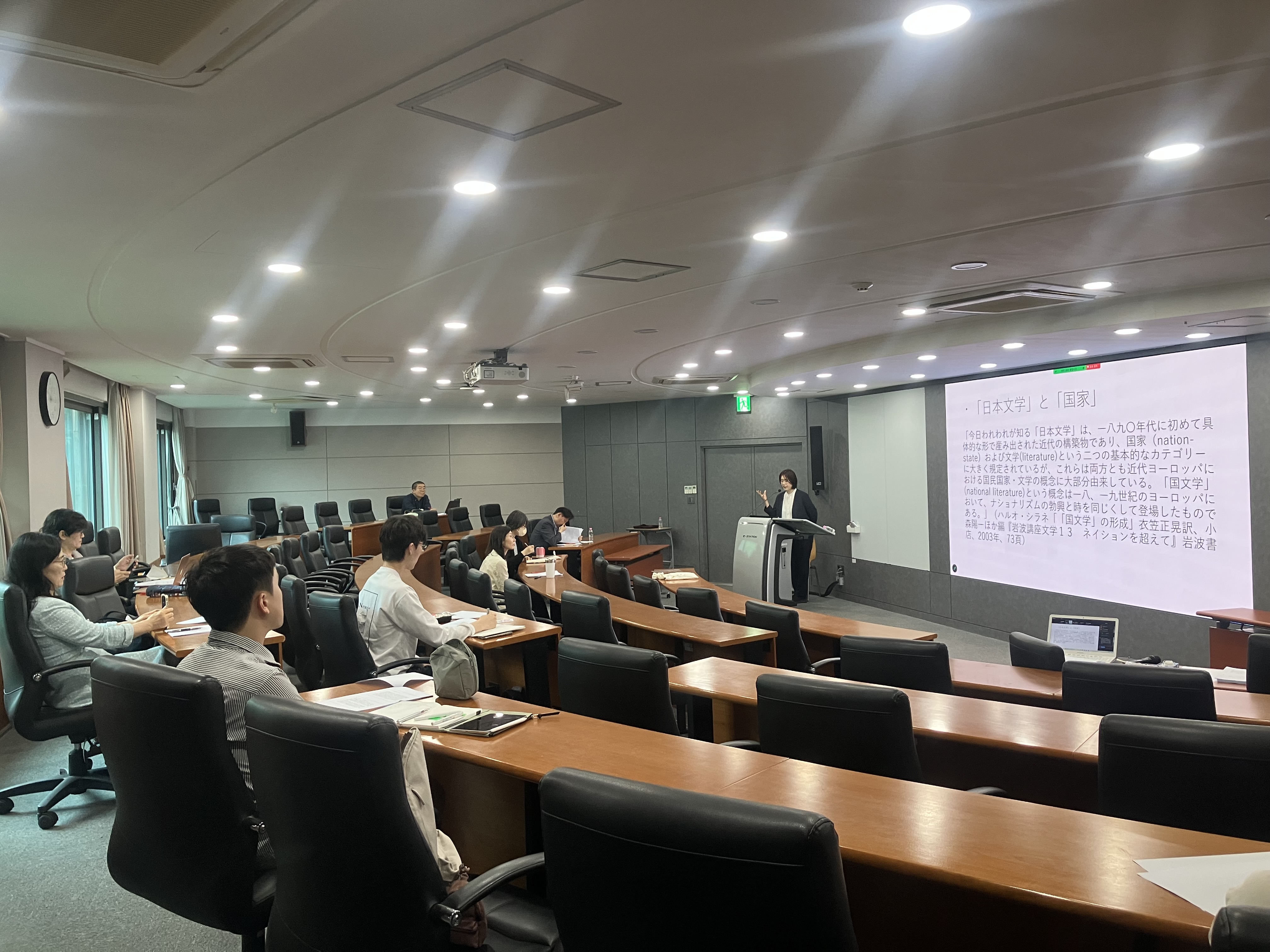
On May 26, 2026, the 302nd Japan Specialist Seminar was held in hybrid format at the GL Room of the Graduate School of International Studies, Seoul National University, and online via Zoom. IWAKAWA Arisa (岩川ありさ), Professor at the Faculty of Letters, Arts and Sciences, Waseda University, gave a presentation titled “A New Framework for Literary and Cultural Studies: Autobiographical Research and the Words of Others.”
From the perspectives of feminist criticism and queer criticism, the speaker noted that the existing framework of literary and cultural studies has been shaped by androcentrism and takes for granted binary gender, cisgender identity, and values centered on heterosexuality and reproduction. She also pointed out that the concept of “Japanese literature” itself is a modern construct formed in the 1890s, deriving from the modern European concepts of the nation-state and literature.
As an alternative, the speaker proposed a new critical practice that connects discussions of autobiographical research, criticism from the standpoint of those directly concerned, and the commons. In discussing autobiographical research, she used the word “that” (アレ), which appears in the novels of OE Kenzaburo, as a clue to explore how events and experiences that cannot be clearly articulated function within fiction, and how reading the words of others can resonate with one’s own life. She then discussed criticism from the standpoint of those directly concerned, asking for whom researchers conduct their research. She argued that such criticism should challenge both literary and social institutions and should take the extent to which the testimonies of those directly affected have been heard as a central issue.
Finally, the speaker connected these discussions to the commons. By bringing together the words of marginalized people, including texts by Virginia Woolf, the voices of Zainichi Korean women, and the notes of homeless women, she emphasized that moving beyond conventional academic writing that claims objectivity and neutrality, and instead articulating the researcher’s own positionality and experience, can produce language capable of reaching someone who has been hurt. She also stressed the need for practices that open literary and cultural studies as a commons.
During the discussion, participants asked about the significance the speaker attributed to women addressing their pain or circumstances through fantasy rather than by foregrounding their status as directly affected subjects. Questions were also raised about the relationship between OE Kenzaburo and Okinawa and about possible clues for interpreting the homophobic characteristics that are evident in OE’s work. Maintaining her position of respecting the diverse scope and layers of narrative, the speaker responded that OE’s writing could be reconsidered from a contemporary perspective by reflecting on the historical context of postwar Japan.