Discussion
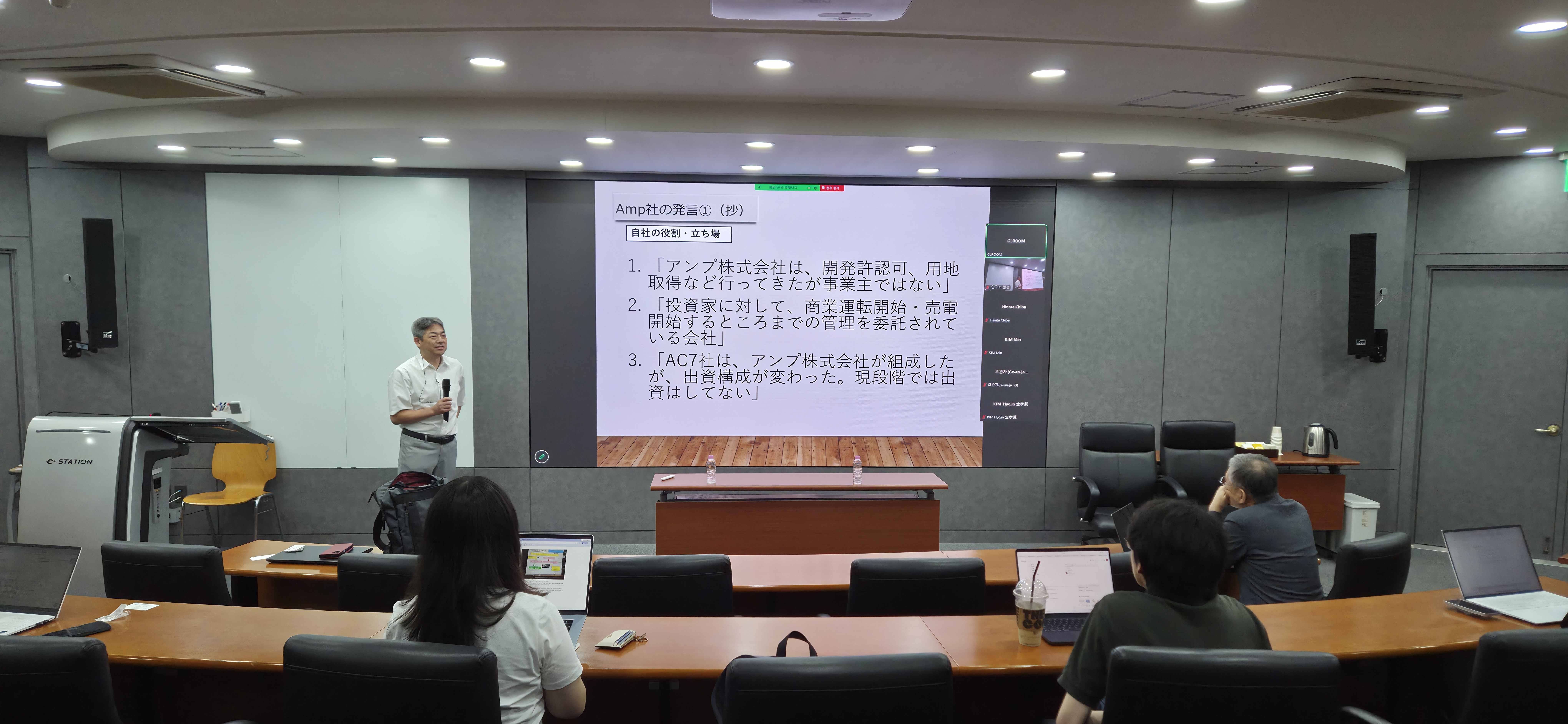
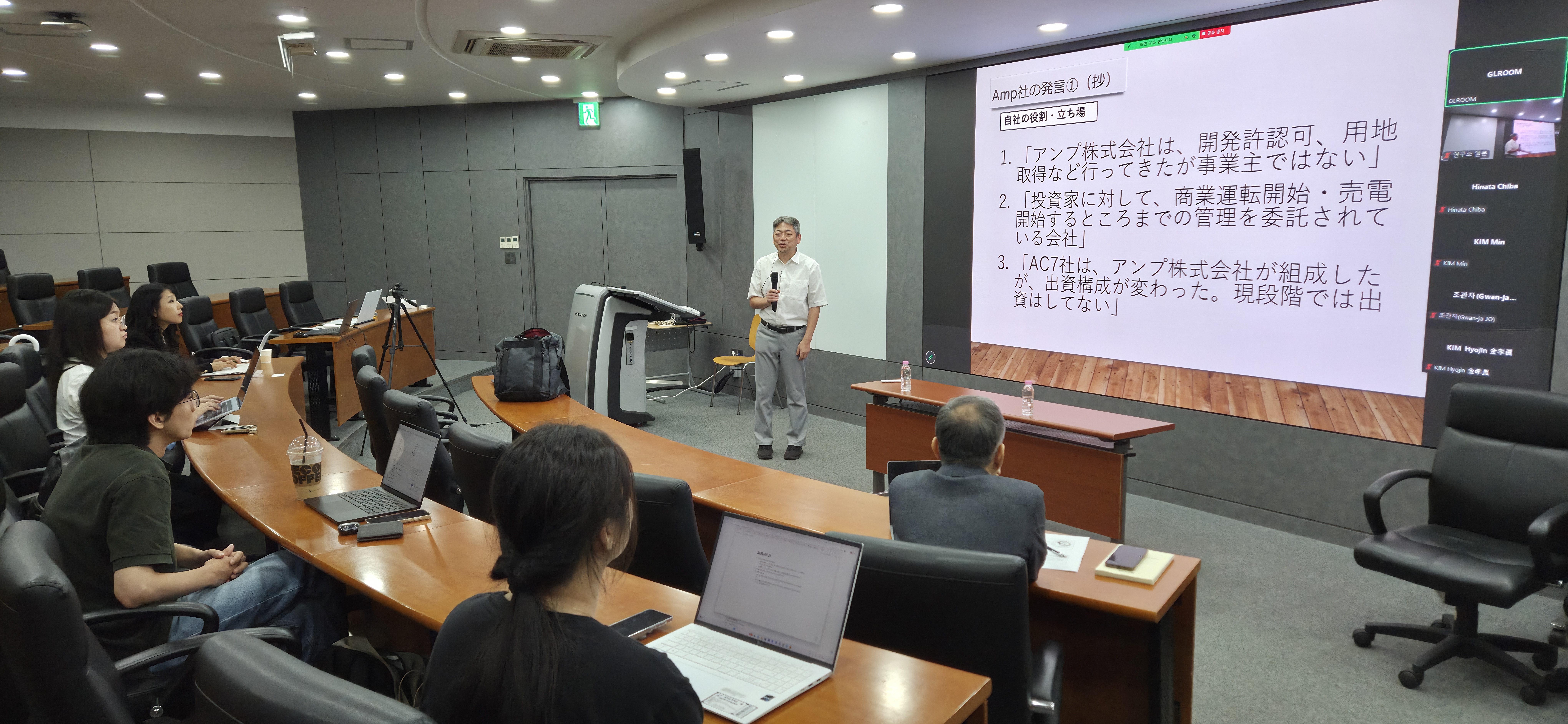
On July 21, 2026, the 8th Korea–Japan Future Seminar was held in a hybrid format at the GL Room of the Graduate School of International Studies, Seoul National University, and online via Zoom. Approximately ten participants attended both in person and online. Professor MATSUTANI Motokazu of the Department of Global and Interdisciplinary Studies, Faculty of International Studies, Tohoku Gakuin University, delivered a one-hour lecture entitled "The Emergence and Current State of the Fukushima Mega Solar Project Issue." Following the presentation, Professor NAM Kijeong of the Institute for Japanese Studies at Seoul National University moderated a 30-minute Q&A session.
Professor MATSUTANI began by providing a geographical overview of Fukushima Prefecture and Fukushima City before introducing the progress of mega solar development projects in the region. He then examined the environmental, social, and safety issues that have accompanied the expansion of these large-scale solar facilities. In particular, he emphasized that many mega solar projects in Fukushima have proceeded without sufficient consultation with local residents, creating significant local concerns. Reported problems include habitat destruction leading to increased bear sightings and light pollution caused by reflections from solar panels.
He further explained that the Fukushima mega solar issue should be understood as a "glocal" problem, in which both energy and economic dimensions operate simultaneously at the global and local levels. In particular, from a business perspective, many projects are driven by foreign investment companies that take advantage of Japan's energy system. As a result, these projects are often managed according to economic logic in ways that remain inaccessible and opaque to local communities.
In conclusion, Professor MATSUTANI argued that mega solar projects in Fukushima are characterized by what he described as "Kaonashi (No-Face)," meaning that no identifiable party assumes clear responsibility for the projects. Because the projects were not designed to coexist with local communities in mind, he stressed that local governments had failed to exercise the oversight and deliberation necessary to prevent such developments.
During the subsequent discussion, participants compared the Fukushima case with similar examples elsewhere in Japan and other nations and exchanged views on the activities of civil society organizations and future directions for civic engagement in response to such projects. The seminar concluded after a lively discussion.